There’s a lot of talk these days about what AI can do. Draft briefs. Review documents. Analyze contracts. Conduct research. Brainstorm ideas. Solve problems. And I’d be the first to say, AI can do a lot. But there’s something AI can’t give you. A mindset.

The determination to find a way to solve your client’s problem, no matter how difficult it looks. The instinct to start with yes instead of no and then figure it out. The willingness to keep looking when the obvious answer doesn’t work. And the understanding that what clients really want isn’t a recitation of all the reasons something can’t be done.

That Damn Bin

I was on a flight recently. You know the drill. We all pile on, stuff our bags in the overhead and hope there aren’t any delays. Then the flight attendants come through and close all the overheads with a bang. Except this time, they didn’t. Or couldn’t.

Continue Reading The Overhead That Wouldn’t Close: A Lesson in Problem Solving


I was a litigator for many years, much of it spent handling mass torts with high stakes. I know how litigation works. I have seen lawyers turn what ought to be straightforward dispute into a bloody war that exponentially increases time and expense. And that was before AI.

I thought about this as I was reading Richard Tromans’ excellent recent piece in Artificial Lawyer, Legal AI vs The Adversarial Incentive. His idea: the more adversarial a legal matter, the more AI’s efficiency gains get eaten up by more work.

I think he’s right, especially in litigation, where the adversity is greatest. And it explains why law firms haven’t fundamentally changed how they work despite AI, something studies by Deloitte and Harbor Global seem to confirm.

The Adversarial Incentive

You would think that AI would reduce the time for doing things like document review and legal research. That it would narrow the focus of discovery. That it would help frame the arguments in a concise way, so you know what’s worth fighting over. In fact, I recently discussed how front-end loading a case, which can now be done much more efficiently, can do all that. And that’s true for some lawyers. 

Continue Reading Technology and Litigation: A Game of Tit for Tat on Steroids

The Jesse Cole Keynote: Law Firms Aren’t Bananas. Or Are They?

You know me and celebrity keynote speakers at legal tech conferences. Sometimes they’re good. Sometimes they’re terrible. So I approached the keynote from Jesse Cole of Bananas baseball fame at the recent 8am Kaleidoscopeconference with a healthy degree of skepticism. 

I must be one of the few people in the universe who didn’t know who Cole is. He’s the founder and owner of the Savannah Bananas, the wildly popular baseball team. Best I could tell, he’s single-handedly trying to turn America’s pastime into something resembling a cross between baseball, a rock concert, and a WWE Main Event. He’s reinventing the traditional baseball experience with his own version of the game, called Banana Ball. It’s complete with unconventional rules, choreographed dances, outrageous promotions, and nonstop fan engagement. And that’s just for starters. And the fans love it.

The Yellow Tuxedo

When I heard all this, I immediately thought what could a guy like this could possibly have relevant to say to the legal community. Then he made his entrance. He didn’t stroll onto the stage carrying a bottle of water and a PowerPoint remote. He came bolting in from the back of the room, decked out in a yellow tux, yellow hat, yellow shirt, and even yellow shoes. All to the beat of Get Ready for This playing at full tilt. I thought, Oh God. Get ready for some more bullshit from a guy who knows nothing about what we do and is there to collect a paycheck.

Well. As the subsequent 24 hours at the conference demonstrated, I do have an uncanny ability to get things completely wrong. (Which, for the sake of all of us, I won’t go into). It turns out Cole had one hell of a lot of things we need to pay attention to. And yes, he spit out a bunch of platitudes. But he backed them up with illustrative and, I daresay, memorable stories. And make no mistake, he’s a damn good storyteller.

Continue Reading The Jesse Cole Keynote: Law Firms Aren’t Bananas. Or Are They?

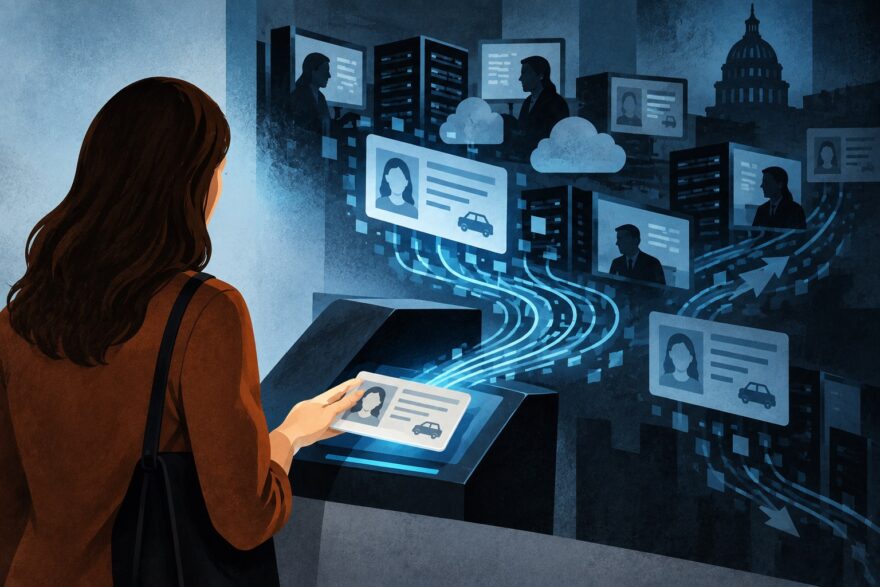
An interesting book by Dave Eggers came out several years ago called The Circle. It was later made into a mediocre movie, but the book has become considerably more disturbing with time.

The essence of the book was the drip-by-drip loss of privacy, symbolized by the loss of integrity of the main character. She goes to work for a big tech company and stands idly by as more and more private information about people becomes public, piece by piece. By the end of the book, she has wholesale bought into the company philosophy: “All that happens must be known.”

Sounds a little creepy but there is some truth to her story: we don’t notice the loss of privacy that happens gradually. And we accept more and more intrusions by entities that can get anything and everything about us and do God knows what with it.


Continue Reading Protecting Our Privacy When Everything That Happens Should Be Known

Neal Page: Sir, excuse me. I know this is your cab, but I’m desperately late for a plane, and I was wondering if I could appeal to your good nature and ask you to let me have it.

Lawyer getting into cab: I don’t have a good nature.

Planes, Trains and Automobiles, 1987.

There’s a lot of hand-wringing these days about the impact AI is going to have on the poor lawyer. You know the one. The guy who brought home over $5 million in compensation last year. Poor baby.

But what isn’t talked about is the impact AI will have down below. The administrative staff. The paralegals. Those in the marketing department. Those who labor in billing and collections to make sure Mr. Big gets his $5 million. All these people slave away in internal offices for peanuts with no clout or status. These are the jobs and the costs the AI vendors merrily trumpet can be eliminated and reduced. These are the people who can least afford to be marginalized.

And what are the firms doing about this issue? Eliminating these positions to cut costs. Conducting massive layoffs of staff. And hiring fancy legal engineers. Searching for directors of AI sometimes at salaries of over $400,000.

Continue Reading The Real Tragedy of AI in Law: Losing Our Soul

I recently finished reading one of Scott Turow’s legal thrillers. As most of you know, Turow is not only an author, but he was also a lawyer, and a trial lawyer at that. At one point in the book, he captured in a single paragraph what it’s really like to try cases. To be a trial lawyer. What he wrote resonated because it mirrored what I experienced and felt when trying cases over my career. And it’s not what you see on TV or even what you believe about other trial lawyers who you think are better at it.

Trials Are Hard

First of all, let’s fix facts. Trying cases is hard. It starts with intense preparation. In the days and weeks leading up to a trial, your anxiety level is over the top. You worry constantly. It involves a lot of sleepless nights, waking up in the middle of the night to jot some thoughts down. It requires poring over documents, thinking about tedious things like the introduction of evidence and admissibility, and constantly fretting if you are up to the task. I know. Been there, done that. 

Continue Reading Want to Try Cases? It’s Hell. Until You’re Standing at the Lecture