The fault, dear Brutus, is not in our stars, but in ourselves. Shakespeare, Julius Caesar (Act 1, Scene 2)
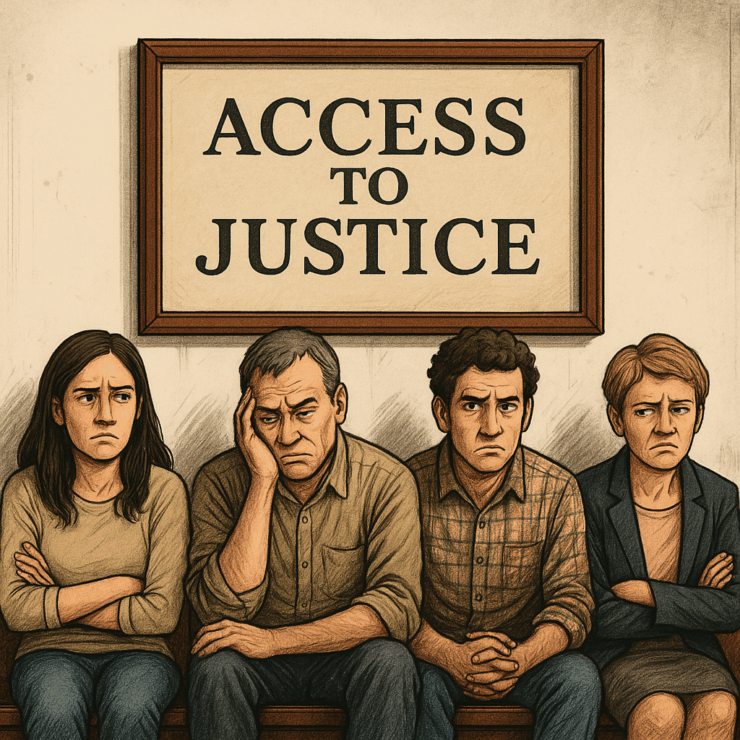
There’s plenty of consternation and hand-wringing among legal pundits about the access to justice gap in our country. We’ve got panels, task forces, and enough white papers to wallpaper every courthouse in Texas.
The conversation usually centers on those who can’t afford quality lawyering (or any lawyering, for that matter), and the bloated cost of even basic legal services.
But all too often in these discussions, we don’t hear from those individuals or small business owners who actually need legal services. You know, the poor woman desperately needing a divorce. The guy knee deep in a property dispute. The small business owner who just wants to get paid without mortgaging her soul. We don’t hear from those who can’t get any legal service and really don’t know what the law can do. These are the voices that matter the most.
Instead we get analysis from on high with facts and figures designed to enlighten and startle us. But perhaps we need to stop and ask those who need legal services what they think of lawyers and our legal system. In doing so, perhaps we can find things to change.
Ten Revealing Comments
So I asked one of my friends who has individually needed some legal services from time to time what they thought of lawyers, legal services and access to justice. I also talked to a few other people similarly situated. A highly sophisticated, totally nonscientific method known as casual conversation.
The answers? Let’s just say if you’re a lawyer, now’s a good time to pour a stiff drink. Here are ten of the most revealing and colorful responses I received:
1. Equal Justice for all could be a realistic visionary idea. The problem is the great visionaries who promised justice for all did not live long enough to implement it. This great idea was instead implemented by lawyers who want to talk a lofty game while lining their own pockets.
2. Lawyers see a world of people desperate for some sort of justice and behave like a kid in a candy store with $100.00. All they want is more, more, more. More money, not more justice. Even rich people can’t “afford” a lawyer.
3. Lawyers prey on desperation and disaster, like flies after honey. (Divorce? A disaster to milk for all its worth). We might as well seek justice in a broken down old car, on a muddy rut filled road, with a teaspoon full of gas, and no spare tire. See how that works?
4. Lawyers invented the concept of a “retainer”. Pay me gobs of money up front you’ll never get back no matter how the work goes or what I actually do. No one else can do that. But they somehow built that in. On top of that they charge by the amount of time spent. Opaque “billable hours” for tasks that can’t be checked or verified.
5. A lot of lawyers tell you they know what they are doing but they really have no idea. If a plumber does a bad job, you can make him do it over. When a lawyer does a horrible job, no redoing it, no refund of money. You can’t even get your retainer back. You don’t really know what the lawyer did.

6. The law and lawyers are like a lazy ignorant teacher who purposely makes a lecture complicated because he or she does not know their subject and is trying to hide it. They try to make it hard to understand, so people who aren’t lawyers will just assume they are too dumb to understand.
7. Need a lawyer? Good luck. Looking for a lawyer is more exhausting than hand plowing a field with a mule. At least when you plow you get something accomplished.
8. Dealing with a lawyer on your case feels like you are putting your trust in a bucket of rattle snakes. They charge you for all the stuff they do with no oversight. No one to check if what they did was needed or even right.
9. Justice should not be conducted like a bar room fight. It doesn’t need to be rocket science. If justice was food, we would have starved to death and made the next layer over the dinosaurs.
10. As my cousin Alice says “There is nothing better than a ‘good” lawyer, and nothing worse than a bad one.”
Maybe the first step isn’t more talk. It’s listening.
Access to Justice Starts with Us
Harsh? Yes. Unfair? Maybe. Useful? Definitely. And no, this isn’t a call for lawyers to enroll in group therapy (although that wouldn’t hurt). But it is a reminder that if we want to fix the justice system, we might want to start by listening to the people who’ve actually tried to use it and who pay the bills. This their perception of us. This is what our customers hink about us and the service we provide (or more pointedly, don’t provide).
If we really care about access to justice, we need to start by seeing ourselves the way our clients see us. Perhaps we should act as if we want to increase access to justice, not just talk about it.
The fault, dear Brutus, is not in our stars, but in ourselves.