Like many of you, I watched and listened to the Keynote that kicked off Apple’s World Wide Development Conference on June 5.
Frankly, I was blown away by the introduction of the Apple Vision Pro device. It undoubtedly has some great attributes as a consumer product (gaming, photos, movies, and sports viewing). But in the long run, it also has the potential power to disrupt the business and legal community in perhaps profound ways.
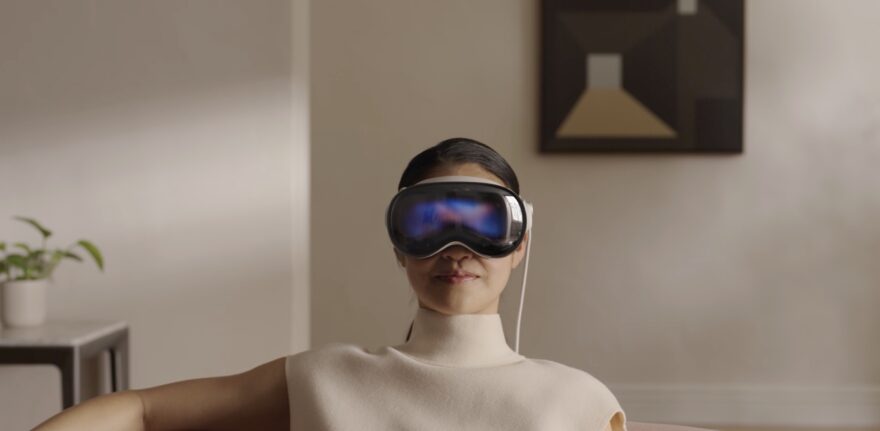
I know; I have heard all the naysayers. People won’t want it. It’s too immersive; it won’t work. It’s just an expensive gadget to supplement what other Apple products— like desktop computers, laptops, and iPads—already to some extent do. And the price ($3599) is just too damn high for a toy to watch movies on.Continue Reading Vision Pro May Change The Way We Work. Lawyers Too

 E-discovery providers are primed to make the shift from providing products designed for e-discovery to providing products for much more complex document analytics.
 I have
  After I published that post, I learned more about the team at LexisNexis that put it together. The product was designed and built by the User Experience (UX) Group at LexisNexis and
 When I was a young lawyer learning how to try cases, s senior partner would always tell me: start every case by developing a chronology. What he meant was you can always better understand the case and see things you might otherwise miss if you look at the timing of the underlying facts.
 The highest and best use of AI is where AI is combined with human intelligence to get the best of both worlds. This lets AI do what it does best: search through a large number of data points, find things like hidden patterns, and “learn” from previous applications. AI frees humans to do what they do best: use experience, knowledge, and insight to see nuanced connections, and use lateral and system thinking.
 Technology can solve many practical problems we face as lawyers if we only will think about the problem and apply technology in innovative ways. This was recently brought home to me in a serendipitous conversation with a lawyer and an expert.
 I recently had the opportunity to try out and use an